

Super should work for workers. This legislation makes it fairer
Superannuation is deferred wages. It should be universal, enforceable, and fair — and this week's legislation takes it a step closer.
Super should work for working people. This legislation makes it fairer.
When I was working behind a bar under WorkChoices, I was earning less than $10 an hour. On paper, I was a subcontractor — running my own business. In practice, I was turning up for rostered shifts and taking direction like any other employee.
The difference mattered when it came to super. Because I was classified as a contractor, there were no automatic employer contributions. If I didn't make contributions myself, nothing accumulated. And when you're earning less than $10 an hour, the priority is rent and groceries — not retirement savings decades away.
That experience is why I support compulsory superannuation so strongly. It should be automatic, universal, and tied to every dollar earned — not dependent on contractual labels designed to shift the burden onto workers.
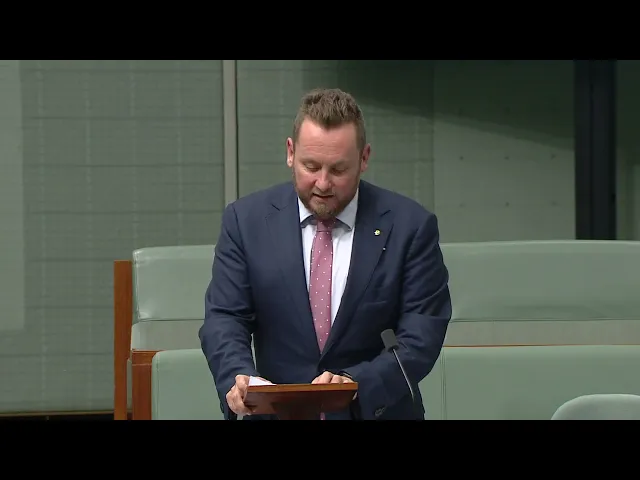
This week I spoke in support of the Treasury Laws Amendment (Building a Stronger and Fairer Super System) Bill 2026. The legislation does two things: it modestly recalibrates super tax concessions at the very top end, and it significantly strengthens support for low-income workers at the other.
What the bill does
Right now, superannuation tax concessions cost the budget over $60 billion a year. Around 38% of those concessions flow to the top 10% of earners — a substantial portion going to individuals with balances far in excess of what's needed for a comfortable retirement.
From the 2026–27 income year, earnings on super balances below $3 million will continue to be taxed at 15%. Nothing changes for more than 99.5% of Australians. For the proportion of earnings attributable to balances between $3 million and $10 million, the effective rate rises to up to 30%. Above $10 million, up to 40%. Both thresholds are indexed to CPI, so the measure stays targeted over time.
This is not a cliff. The additional tax applies only to the proportion of earnings corresponding to the portion of the balance above the threshold. If your balance is $3.5 million, only the slice above $3 million is affected — not your entire balance.
Stronger support for low-income workers
The bill also upgrades the Low Income Superannuation Tax Offset (LISTO). The eligibility threshold hasn't moved since 2020–21, meaning workers earning between $37,000 and $45,000 have been missing out. From 1 July 2027, that threshold rises to $45,000, and the maximum payment increases to $810.
The result: around 770,000 additional Australians become eligible. Around 490,000 receive a higher payment. In total, about 1.3 million Australians benefit — roughly 60% of them women. For workers in aged care, retail, and administration, the boost could translate to around $15,000 in additional retirement savings over a working life.
To put that in perspective: 14 times as many Australians benefit from the LISTO boost as are affected by the change at the top.
Why this matters
Superannuation isn't a theoretical construct. It's deferred wages. It was built on a simple idea: that retirement dignity should be universal — not dependent on luck, inheritance, or what classification your employer chose for you.
Labor built this system and has kept improving it. We increased the superannuation guarantee to 12%. We legislated the objective of super. We introduced payday super so workers receive their contributions at the same time as their wages. We've ensured super is paid on paid parental leave.
This bill continues that work. It keeps concessions generous for the overwhelming majority of Australians, recalibrates them sensibly at the extreme upper end, and strengthens the system for the people who need it most.

Find / Contact us
Electorate Office
Suite 6, 129 Grand Boulevard
Joondalup WA 6027
Phone
(08) 9300 2244
Socials & Legal


Terms & Conditions
Acknowledgement of Country
Tom French MP acknowledges the traditional custodians of country throughout Australia and recognises their continuing connection to land, waters and community. He pays his respects to them and their cultures; and to Elders both past and present.
Authorised by Tom French, Suite 6, 129 Grand Boulevard, Joondalup, WA, 6027