

Where was this concern when the refineries closed?
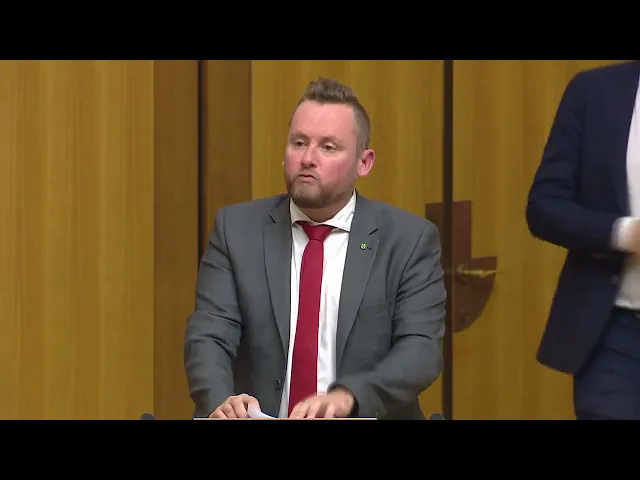
This week I spoke in Parliament against the opposition’s motion on fuel security — because while they’re very good at talking up concern, their record tells a different story.
Australians aren’t naive. They’re watching what’s happening in the Middle East. They understand that instability in global energy markets has real consequences here at home — at the bowser, in their household budgets, and across the supply chains that keep this country moving.
What people expect from their government in moments like this isn’t panic. It’s competence, coordination, and a clear plan.
That’s exactly what we’re delivering.
Real relief, right now
The government has halved the fuel excise for three months. That’s around 26 cents off every litre of petrol and diesel — about $19 off a typical tank. For families under pressure, that matters.
We’ve also reduced the heavy vehicle road user charge to zero. That takes pressure off freight and supply chains, because fuel isn’t optional in this country. It’s how food moves from farms to supermarkets. It’s how medicines get delivered. It’s how tradies, manufacturers, and transport operators keep working.
A coordinated response
We’ve boosted supply by releasing up to 20 per cent of fuel reserves. We’ve amended fuel standards to bring more supply into the market. And we’ve put into place the coordination architecture needed to manage a challenge of this scale:
∙ A dedicated fuel supply taskforce
∙ National Cabinet engagement
∙ Industry roundtables with transport, agriculture, and fuel suppliers
∙ The National Coordination Mechanism activated
∙ The National Oil Supplies Emergency Committee convened
That’s what a plan looks like.
What it means in Moore
In outer metropolitan electorates like Moore, the reliance on fuel is front and centre. Across our growing suburbs and around Joondalup, people depend on their cars to get to work, run small businesses, and keep things moving.
When fuel prices spike, it’s not abstract. It’s tradies cancelling jobs because the margins don’t stack up. It’s small businesses absorbing higher delivery costs. It’s families thinking twice about every trip — school drop-offs, weekend sport, visits to family.
That’s why measures like halving the fuel excise matter. Not as a media grab, but as real relief right now.
A question of record
Before coming to Parliament, I worked as an electrician on commercial and industrial sites. Systems don’t run on rhetoric. They run on planning, coordination, and reliable inputs — like fuel.
Those opposite like to talk up concern. But when it comes to fuel security, their record speaks for itself.
Four of Australia’s six refineries closed under the Coalition. Two of those closures happened when the current Opposition Leader was the energy minister. At the time, he said those closures wouldn’t negatively impact Australia’s fuel supply. That wasn’t just wrong — it showed a fundamental misunderstanding of fuel security.
When you hollow out domestic refining capacity, you increase dependence on imports and exposure to global shocks. That’s the vulnerability we’re now working to manage.
Then there’s the decision to spend close to $100 million storing fuel in the United States — 14,000 kilometres away. You don’t strengthen Australia’s fuel security by storing fuel on another continent.
The contrast is clear
They talked. We’re acting.
They weakened capacity. We’re strengthening it.
They outsourced resilience. We’re rebuilding it.
In moments like this, what matters isn’t who can raise the loudest concern. What matters is who’s actually doing the work.
We’re doing the work.
-Tom

Find / Contact us
Electorate Office
Suite 6, 129 Grand Boulevard
Joondalup WA 6027
Phone
(08) 9300 2244
Socials & Legal


Terms & Conditions
Acknowledgement of Country
Tom French MP acknowledges the traditional custodians of country throughout Australia and recognises their continuing connection to land, waters and community. He pays his respects to them and their cultures; and to Elders both past and present.
Authorised by Tom French, Suite 6, 129 Grand Boulevard, Joondalup, WA, 6027