


Backing the Building Cooperative Workplaces Bill
Workplace rights have to be strong. But they also have to be usable.
Good workplace laws aren’t just about what they promise. They’re about whether an ordinary worker can actually use them.
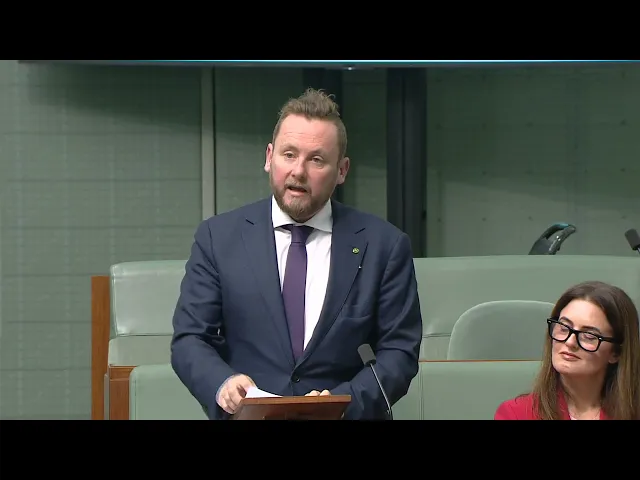
This week I spoke in support of the Workplace Relations Legislation Amendment (Building Cooperative Workplaces No. 1) Bill 2026. A lot of it is technical, but technical doesn’t mean minor. In workplace relations, procedure decides real things: whether a worker can get a remedy, whether an employer gets certainty, whether the Fair Work Commission can deal with disputes efficiently.
I come at this with a practical view. I was a qualified electrician before I became an industrial lawyer, and I worked for the Electrical Trades Union and the United Professional Firefighters Union. I’ve been covered by industrial instruments, relied on them, enforced them and helped negotiate them. That experience teaches you one thing above all: a right buried behind delay, cost or procedural obstruction isn’t much comfort to the person who needs it.
Helping the umpire move
The Fair Work Commission sits at the centre of the system, and its workload has grown. A system that’s too slow, or too easily clogged by procedural arguments, isn’t fair to anyone.
One of the key reforms deals with jurisdictional objections in dismissal and termination disputes. At present, an argument about whether the Commission can even hear a matter can hold things up before anyone gets near the substance. I’ve seen what those fights do, both time and money spent before the real issue is touched. This bill lets the Commission move to conciliation or mediation without first having to resolve those objections. The argument isn’t removed; it can still be determined later. The Commission just gets the parties talking sooner to see if the matter can be resolved.
The bill also gives the Commission stronger powers to deal with claims that are frivolous, vexatious or have no reasonable prospects, and lets it decide more matters on the papers, but only with the consent of the parties for contested matters. That was an important change after consultation: efficiency improved without losing procedural fairness.
Backing better bargaining
The bill improves supported bargaining, which matters most in sectors where workers are lower paid or workforces are fragmented. Where the Commission has already authorised bargaining for substantially the same group, the law shouldn’t force everyone to repeat unnecessary steps.
It also lets Commonwealth purchasing power promote secure jobs and fair conditions where appropriate. Public money shouldn’t drive a race to the bottom. A genuinely negotiated enterprise agreement is a transparent way to deliver fair conditions for workers and certainty for employers.
A fairer go for truckies
The final part deals with road transport. Conventional high-income thresholds don’t fit this industry, because gross income isn’t take-home income once fuel, tyres, maintenance, insurance, registration and downtime are accounted for. This bill gives more truckies access to a quick, practical process in the Commission to challenge unfair contracts, which matters enormously when a truck is a major capital investment and an unfair contract can hit hard and fast.
The common thread
Every part of this bill is about practical improvement: helping the Commission deal with matters efficiently, supporting bargaining, backing secure jobs, and recognising the real economics of road transport. A fair system protects workers, gives employers certainty, supports bargaining and equips the independent umpire to do its job properly. That’s why I commend the bill to the House.

Find / Contact us
Electorate Office
Suite 6, 129 Grand Boulevard
Joondalup WA 6027
Phone
(08) 9300 2244
Socials & Legal


Terms & Conditions
Acknowledgement of Country
Tom French MP acknowledges the traditional custodians of country throughout Australia and recognises their continuing connection to land, waters and community. He pays his respects to them and their cultures; and to Elders both past and present.
Authorised by Tom French, Suite 6, 129 Grand Boulevard, Joondalup, WA, 6027