

Fair pay for Australian authors: why I support the lending rights bill
What the bill is about
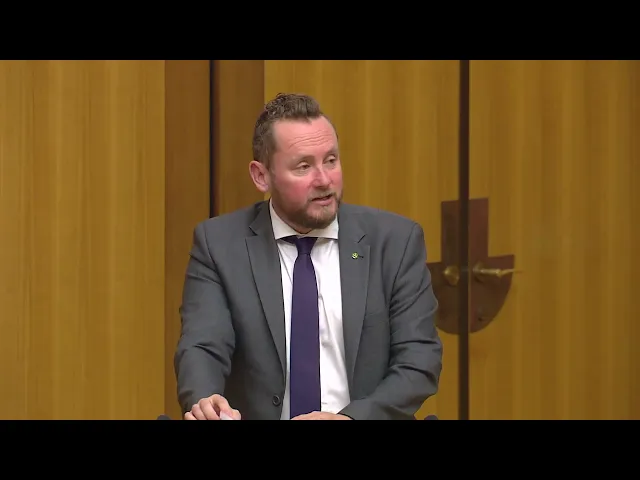
Today I spoke in parliament in support of the Public and Educational Lending Rights (Better Income for Authors) Bill 2026. The idea at the heart of it is simple: when Australian books are made freely available through public and educational libraries, the people who created and published those books should receive fair recognition and payment for their work.
That shouldn’t be controversial. But in the arts, even the obvious sometimes has to be legislated.
The reality of life as an Australian writer
The average income for an Australian writer in 2021–22 was reportedly $16,100. That’s not a sustainable income. It’s not even close. Yet these are the people whose books sit in our libraries, whose stories are read in classrooms, whose work helps shape our national imagination.
Applause is lovely, but it doesn’t pay the rent, it doesn’t cover groceries, and it’s notoriously difficult to use at tax time.
The Public Lending Right Scheme has been part of the Australian cultural landscape since the Whitlam government approved it in 1974. It reflects a very Labor idea — that access to culture should be broad, but that the people who make the culture shouldn’t be expected to survive on applause alone. In the 2024–25 financial year, more than 17,000 payments were made to eligible creators and publishers through these schemes, totalling more than $28 million. For many creators, it can be the difference between writing the next book and having to put the manuscript away.
What changes under this bill
The bill brings the public lending right and educational lending right schemes together in a single, contemporary legislative framework. The public lending right has had a statutory basis for decades. The educational lending right has operated administratively since 2000. This bill brings them together under one roof.
It also properly recognises digital formats — ebooks, audiobooks, platforms like Libby and Hoopla. That’s how people read now. A lending rights scheme that didn’t deal with digital borrowing would be a scheme looking backwards. This bill looks forward.
And it establishes a unified committee with representation from authors, publishers, libraries and the public service — so the people affected by the scheme have a genuine role in advising on how it operates.
Why this matters in Moore
In Moore, the City of Joondalup libraries at Joondalup, Duncraig, Whitford and Woodvale are much more than buildings with shelves. They’re places where kids discover books they didn’t know they needed. Places where parents can take their children without needing to spend money. Places where older Australians stay connected, informed and curious. Libraries make culture available to everyone, regardless of income. That’s one of the great democratic achievements of public life.
But free access for readers shouldn’t mean unpaid work for writers. That’s the balance this bill strikes.
Earlier this year I hosted Susan Templeman, the Special Envoy for the Arts, in Joondalup, and brought together local arts organisations including people from the Peter Cowan Writers Centre, the Joondalup Symphony Orchestra, and others. The message was clear: there is enormous talent in our community, but real challenges in sustaining creative work.
Culture is infrastructure. It’s not an optional extra. We should want children in Gwelup, Padbury, Craigie and Heathridge picking up books that speak in Australian voices. We should want emerging writers to look at the industry and think there’s a pathway here. This bill helps with that.
-Tom

Find / Contact us
Electorate Office
Suite 6, 129 Grand Boulevard
Joondalup WA 6027
Phone
(08) 9300 2244
Socials & Legal


Terms & Conditions
Acknowledgement of Country
Tom French MP acknowledges the traditional custodians of country throughout Australia and recognises their continuing connection to land, waters and community. He pays his respects to them and their cultures; and to Elders both past and present.
Authorised by Tom French, Suite 6, 129 Grand Boulevard, Joondalup, WA, 6027