

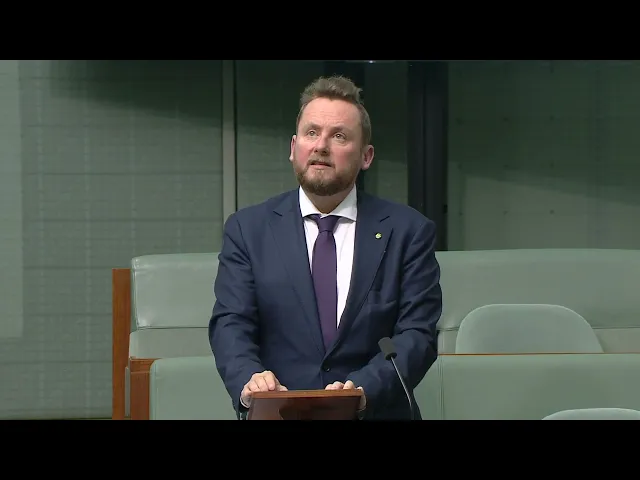

Opening the doors to education and training
I went to TAFE in Maitland to get into university. Later I did a pre-apprenticeship at South Metropolitan TAFE in Beaconsfield before starting my electrical apprenticeship. Years after that, I studied law at Murdoch. None of those steps were inevitable — and that's exactly why I support this bill.
Distance isn't just kilometres
I grew up spending time in Dungog and Merriwa, visiting family in Auburn in South Australia and Woy Woy on the Central Coast. In country towns, distance isn't a line on a map. It's cost. It's accommodation. It's transport. It's leaving family and work behind. It's trying to work out whether you belong in a lecture theatre when nobody in your immediate circle has done it before.
Those communities aren't short of ambition or capable students. What they're often short of is access — to campuses, to advice, to financial support, and to someone saying early enough that tertiary education is a realistic option.
You can't be what you can't see. That's not about ability. It's about whether a system has been built with you in mind. Too often, it hasn't been.
What the Accord asks of us
The Universities Accord's central conclusion is blunt: we'll need around 80 per cent of the workforce to have a tertiary education. More people at TAFE. More people at university. And we can't get there by relying on the same students from the same suburbs going to the same institutions through the same pathways. If Australia needs more skilled workers, we have to widen the pool of people who can get those skills.
What this bill does
It creates a managed growth funding system, so growth in university places is planned and funded properly rather than left to drift. The Australian Tertiary Education Commission gets a formal role in allocating Commonwealth supported places.
It also establishes demand-driven, needs-based funding. The phrase is technical; the idea isn't. If a university enrols more students from low-socioeconomic backgrounds, more First Nations students, or more students at regional campuses, it receives extra support to help them participate and succeed — tutoring, mentoring, academic support, scholarships, or the higher cost of running a campus outside a capital city.
And it effectively uncaps places for students from low-socioeconomic backgrounds and regional areas. When a student has the marks, the ability and the determination, the system should be able to respond.
The offer isn't the end of it
For students from country areas, the obstacles don't stop when the offer arrives. In some ways that's when the real test starts. The cost of moving. The cost of staying. Long hours at work. The unspoken feeling that university was built for someone else.
That feeling decides whether a student asks for help or stays silent. Whether they keep going after the first failed assessment. This bill says participation and success are both part of the job.
TAFE and university are the same ladder
I became an electrician. I know the value of a trade, and I know university isn't the only path to a good life. A good tertiary system isn't university versus TAFE, or degree versus trade. For some people the first rung is a bridging course. For others it's a certificate, an apprenticeship, a diploma, a degree, or a second chance later in life.
In Moore, we've got the Joondalup Learning Precinct — Edith Cowan University, North Metropolitan TAFE and the WA Police Academy. We understand what happens when skills, training, employment and community connect.
Why I support it
No single bill solves every problem in higher education. But this one makes real structural change: growth is planned, funding follows need, and opportunity isn't rationed by geography.
We can't tell regional kids to dream big and then build a system that makes those dreams too expensive and too distant. Talent is everywhere. Opportunity is not. Government has a responsibility to narrow that gap.
I got chances because education and training opened doors for me. I'll do everything I can to make sure more people get the same chance.
-Tom

Find / Contact us
Electorate Office
Suite 6, 129 Grand Boulevard
Joondalup WA 6027
Phone
(08) 9300 2244
Socials & Legal


Terms & Conditions
Acknowledgement of Country
Tom French MP acknowledges the traditional custodians of country throughout Australia and recognises their continuing connection to land, waters and community. He pays his respects to them and their cultures; and to Elders both past and present.
Authorised by Tom French, Suite 6, 129 Grand Boulevard, Joondalup, WA, 6027