


AI is changing work. Here’s what we’re doing about it.
AI is reshaping how Australians work, learn and connect. It’s changing workplaces, creating new jobs, automating others and raising legitimate questions about what comes next. That’s not in dispute. The question is how that change is managed, and in whose interests.
The government’s position is straightforward: we don’t step aside and hope the market sorts it out. Technological change has to be shaped so the benefits are broadly shared and the risks are properly managed.
The National AI Plan
In December, the government released the National AI Plan — a coordinated framework built around three objectives: capturing the opportunity, spreading the benefits and keeping Australians safe.
It’s backed by real investment. $29.9 million for the AI Safety Institute to support regulators and keep our legal settings fit for purpose. $1 billion through the National Reconstruction Fund for critical technologies including AI. $166 million for government AI capability. Research estimates suggest AI could contribute up to $200 billion a year to Australia’s economy and support around 150,000 jobs by the end of the decade. The task isn’t to resist AI, it’s to make sure Australians benefit from it.
Skills and training
Supporting workers through technological change means sustained investment in skills and education. The National Skills Agreement, expanded vocational education and fee-free TAFE are all in place to help Australians adapt. The Future Skills Organisation is developing AI-specific training competencies across the qualifications framework. This isn’t theoretical, it’s happening now.
Workers have to have a voice
The National AI Plan is clear that workers and unions must be involved in how AI is deployed in workplaces. Deployment has to be transparent, safe and fair. AI can improve productivity and safety, but it raises real concerns — surveillance, bias, the nature of work itself. These are being addressed through consultation, regulation and existing workplace protections. Productivity gains should be shared, not concentrated.
Regulation that works
Australia already has robust, technology-neutral laws covering workplace safety, consumer protection and privacy. They still apply. Where new risks emerge, the AI Safety Institute is being established to work with regulators and make sure our settings keep pace. That’s a measured, evidence-based approach.
Australia has real advantages in this space, a skilled workforce, a strong research base and access to clean energy. Billions are already flowing into data centre investment. The National AI Plan provides the policy certainty industry needs to invest and build domestic capability here.
Why I couldn’t support the motion
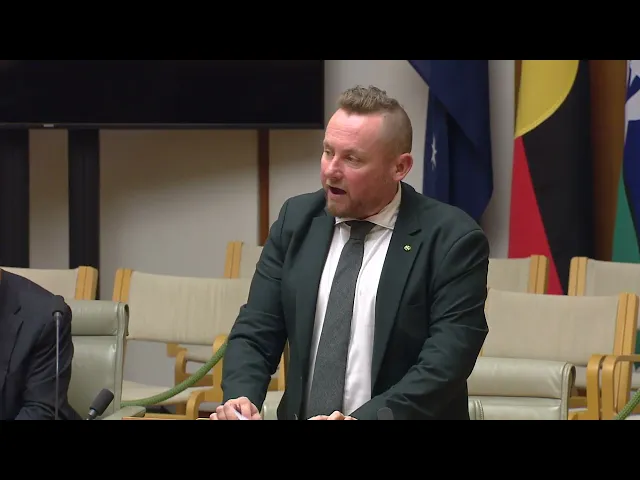
The Coalition moved a motion in the House today calling on the government to “act now” on AI.
The motion acknowledged AI is changing workplaces — fair enough.
But it claimed the government has no plan, that ministers are in conflict, and that workers are being left behind. It didn’t propose an alternative. No policy. No funding. No framework.
The work is being done.
The plan exists. It’s coordinated, practical and being implemented with industry, unions and the community. A motion that ignores all of that isn’t a serious contribution to the debate. It's slop.
This is about whether technological change is managed in a way that reflects Australian values of fairness, inclusion and opportunity.
We support innovation, but we don’t abandon workers.
We invest in skills, not slogans.
And we make sure the benefits of progress are realised here and shared by all Australians.
I couldn't support the motion.
-Tom

Find / Contact us
Electorate Office
Suite 6, 129 Grand Boulevard
Joondalup WA 6027
Phone
(08) 9300 2244
Socials & Legal


Terms & Conditions
Acknowledgement of Country
Tom French MP acknowledges the traditional custodians of country throughout Australia and recognises their continuing connection to land, waters and community. He pays his respects to them and their cultures; and to Elders both past and present.
Authorised by Tom French, Suite 6, 129 Grand Boulevard, Joondalup, WA, 6027